Who We Are
About Us
A platform formed by the Mosopisiek to air their plight and reclaim their voice.
Benet Mosop Community Association was formed by the Mosopisiek community as a platform to air out their plight of marginalization, discrimination and human rights abuses committed to them when their ancestral home lands in Mount Elgon forest and grass lands were turned into wildlife protected areas.
Since the community was not politically represented by anybody and was not given a chance to elect its leadership, all decisions were made for them without free, prior and informed consent.
Through Benet Mosop Community Association, we are:
- 1 Dialogue with government over the disparities the community is going through.
- 2 Demand services such as health and education for children.
- 3 Advocate for the rights of the community and individuals against marginalization and human rights abuses.
- 4 Reach out to political actors and government entities for a change of policies.
Our Heritage
Mosopisyek of Benet indigenous community
Historical Facts
Mosopisiek is an indigenous people who have lived in the Mount Elgon forest and grasslands in eastern Uganda since time immemorial — dating back over 500 years, before the arrival of the first explorers.
Their land borders Kenya at the Suam River in the east, up to the Rokok River in the west, following the colonial boundary of 1936–37, and Sessik in the south.
The Mosopisiek reared cattle, sheep and goats for their livelihoods, and were so devoted to their cattle that they would swear by them as “Ndoye Tany.” Cows, goats and sheep provided milk and meat.
They were also hunters and food gatherers, roaming the mountain in search of food and honey. Women wove baskets and traded with the Sabiny community in the lowlands in exchange for grain, millet and makaknik (dried bananas).
They brewed local drinks from honey and roots, made beehives, and exchanged goods for domestic animals.
Mosopisiek Culture
Mosopisiek had a unique culture spanning marriage, dressing, dance and drama, storytelling, sports and wrestling, arrow shooting, quivers, fire lighting, bow-making, spirituality and circumcision.
Marriage was arranged between families after due diligence into a prospective partner's background. Dowry was paid in the form of 12 cows, 8 goats and a donkey.
Clothing was made from the skins and hides of wild and domestic animals — blue monkey, white colobus monkey, antelope and cowhide — later joined by blankets.
Dance featured "kiranchit" (beating a large wood placed on the ground with sticks) and the "kiriinket" drum made from cowhide, central to ceremonies such as the twin-child celebration.
Storytelling by elders passed down history and lessons to the younger generation. Hunting doubled as sport and conditioning — a heritage many credit for producing world-class Ugandan marathon athletes such as Stephen Kiprotich, Joshua Cheptegei, Jacob Kiplimo, Kipsiro and Peruth Chemutai.
Mosopisiek Spirituality
Mosopisiek were led by prophets, such as Arapchesorr of the Kaparkach clan, who were highly respected for their ability to foretell coming events and perform rituals ahead of forecast disasters.
Prophets called elders’ meetings ("Balmoishek") to mobilize the community, and, under community agreement, acted to defend what was right through spiritual authority.
They performed sacrifices to guard against famine, invasion, drought and food insecurity, and directed who should carry out which responsibilities.
Circumcision in Mosopisiek Culture
The cold of the Mount Elgon forest and grasslands was endured by initiates being prepared for the transition into manhood or womanhood.
Initiates walked barefoot through the night and day; without phones or roads, relatives and friends were invited to feasts and occurrences on foot.
Brewing a local alcohol called "komek" was part of the ritual order, shared with family during the initiation period.
The Mosopisiek were later displaced from their ancestral homelands when the post-colonial Ugandan government created a wildlife protected area over their land beginning around 1990, dismantling the community land tenure system and scattering families across the Sebei sub-region — Bukwo, Kween district, and into Kenya.
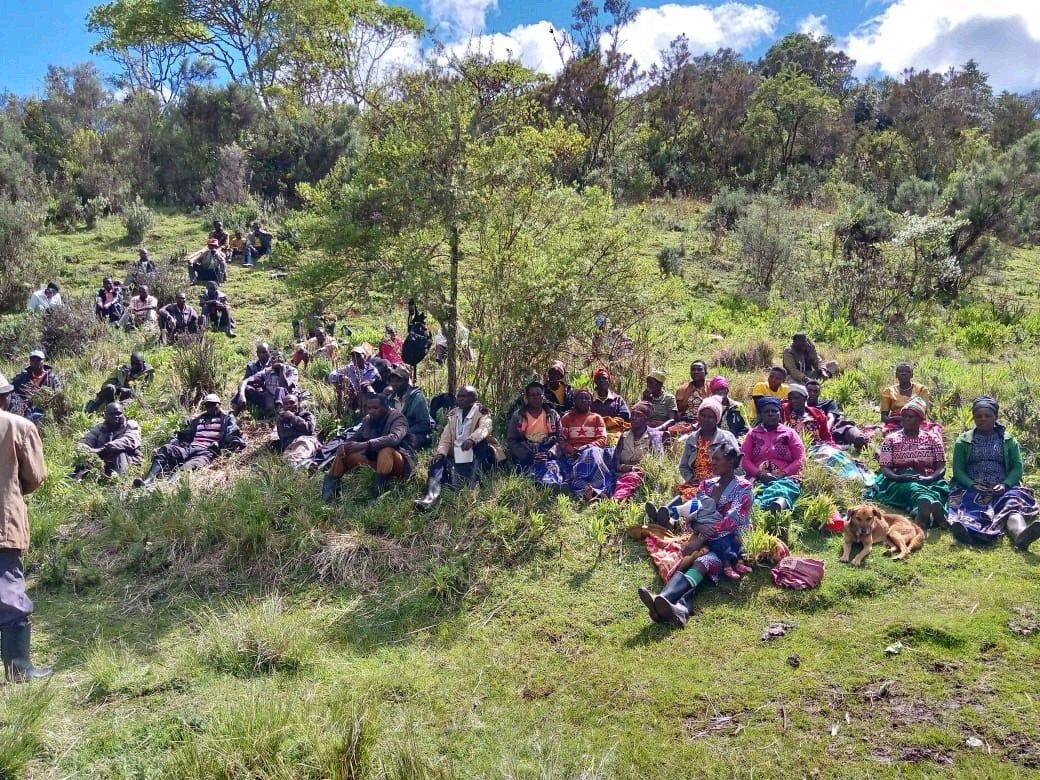
Mosopisyek council of elders meeting, comprising 37 clans of Mosop